From: Shiyuan Lin
Group 4
In this unit’s group collaboration project, we first carried out preliminary creative preparation: each team member independently wrote a short play story outline, and then through an internal group vote, we selected the outline with the most consensus as the core story framework for the entire group project. This process not only integrated the diverse creativity of team members, but also clarified the main creative direction for follow-up work through democratic decision-making, laying the foundation for the script polishing, scene design, and division of labor execution of the short play.
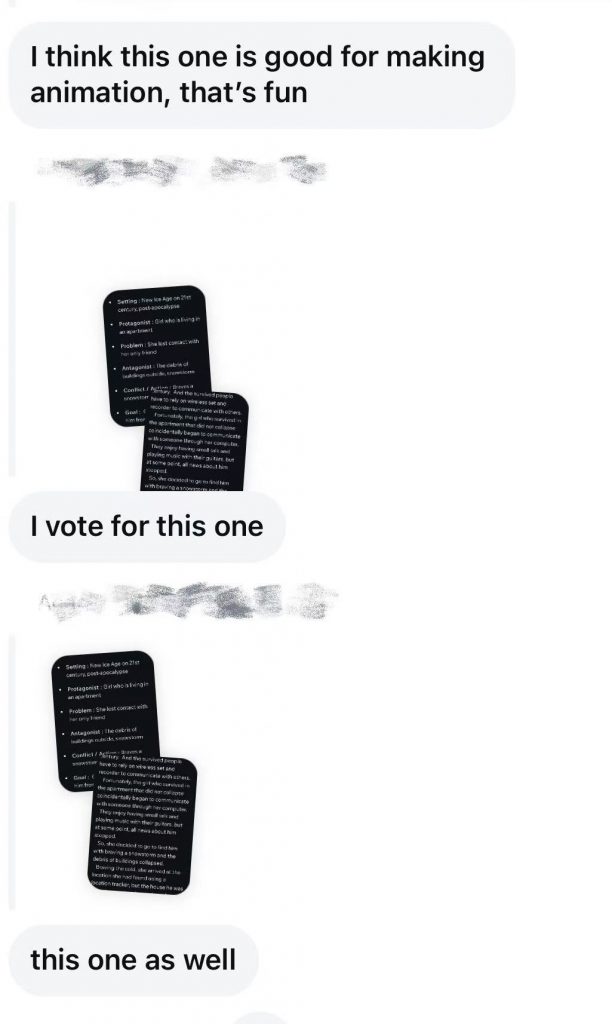
Finally, our story is as follows:
Set in a 21st-century new ice age triggered by climate change, this story follows a girl surviving in an intact apartment. In a post-apocalyptic world where communication relies on radios and recorders, she forms a bond with a friend through their computers, sharing guitar music and daily chats. When all contact suddenly ceases, she braves a raging snowstorm and collapsed debris, using a tracker to reach his home. Finding it empty and buried in snow, she discovers a cassette tape on the desk. The story ends as she holds the tape, staring into the stormy sky—a quiet farewell to connection lost in a frozen world.
After officially finalizing the specific story, we carried out a rough division of labor within the group.
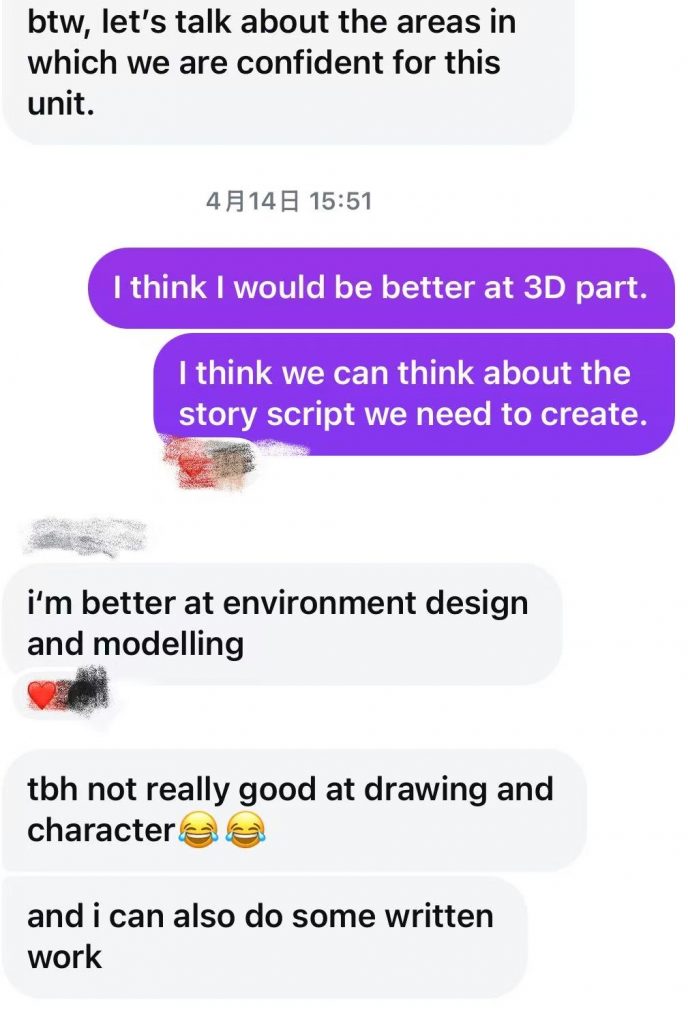
In our story, there is a female lead and a male lead. The tasks assigned to me are to design the concept art for the female lead’s apartment and to plan the entire layout of her living space.
Then I began to collect reference pictures and make some rough partial designs. My team members completed preliminary design sketches for the room exterior and the layout of the two houses, providing a basis for my ongoing design work.
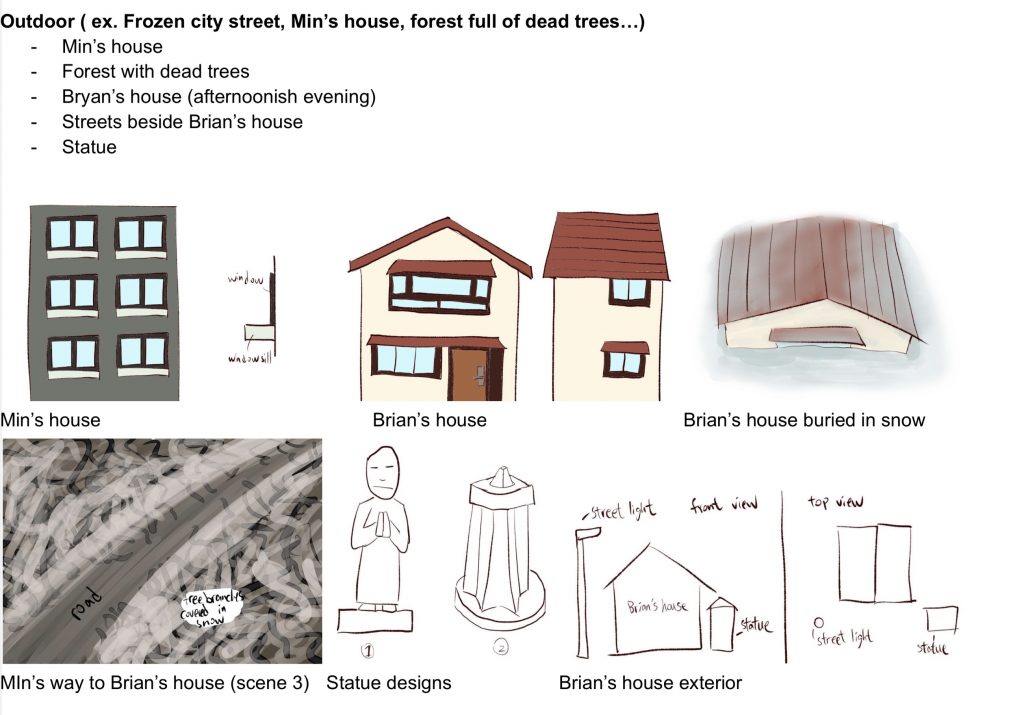
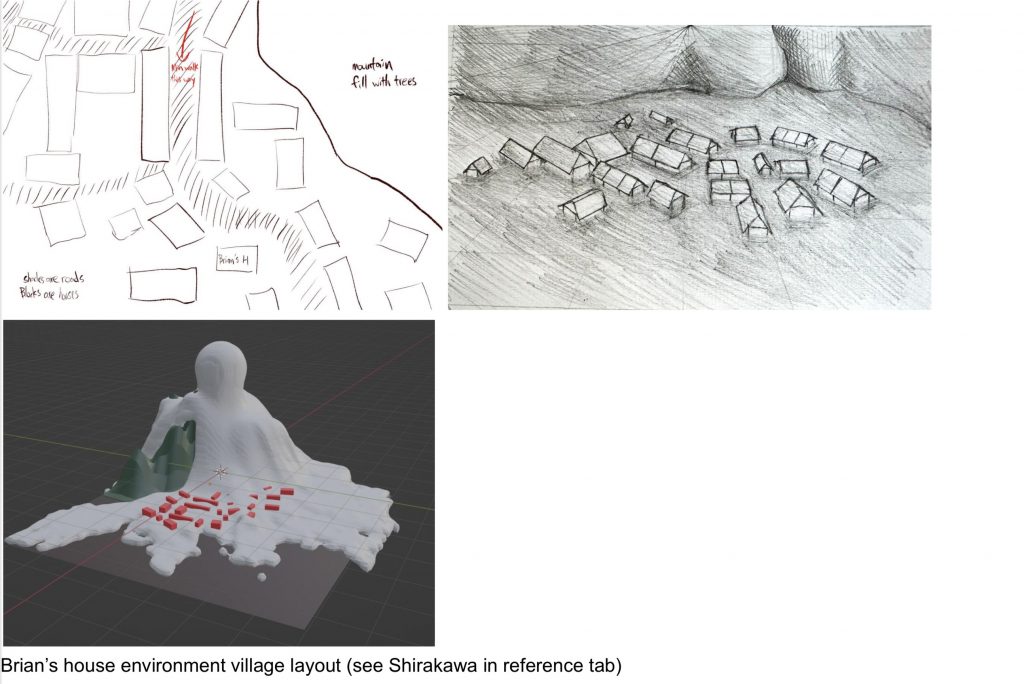
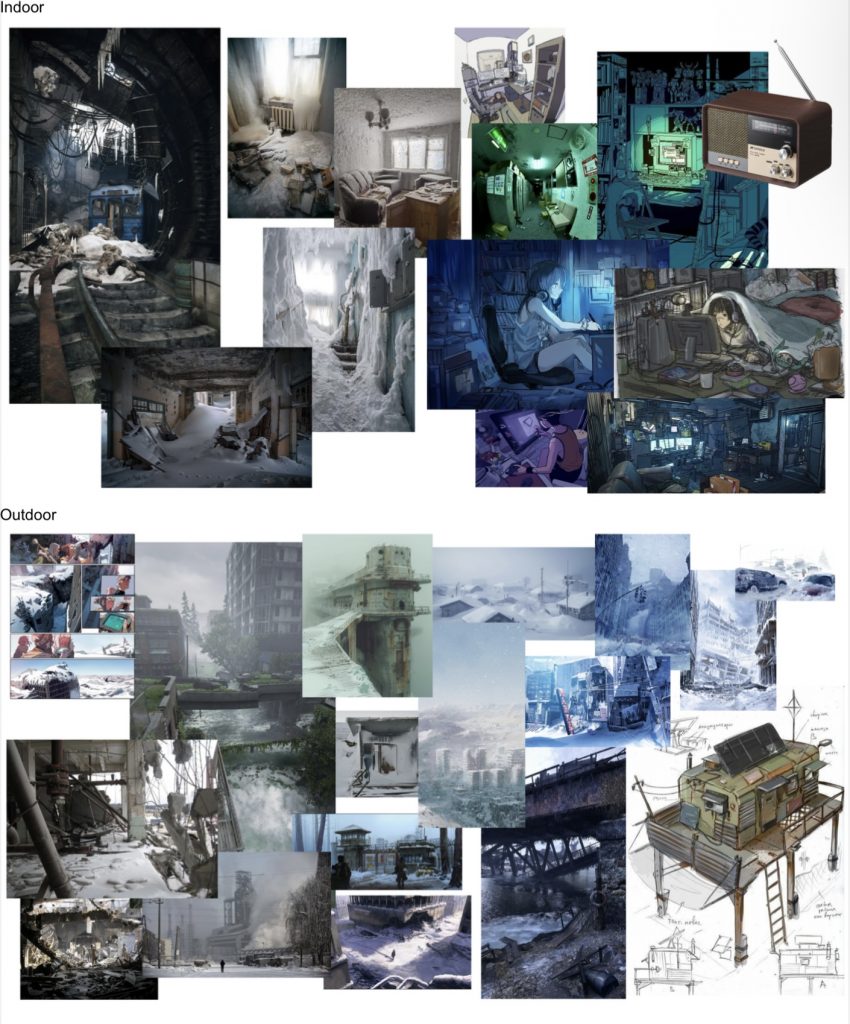
I completed the design of the room concept map and promptly shared it with my team members for review. They provided some suggestions, which I incorporated into the subsequent modeling modifications.
At the same time, my team members are modifying the protagonist’s model.
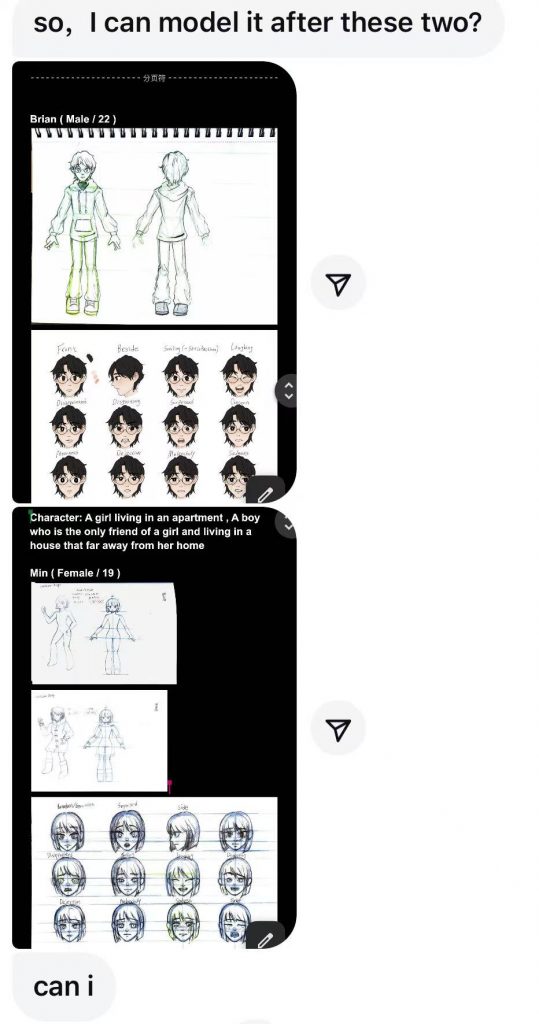
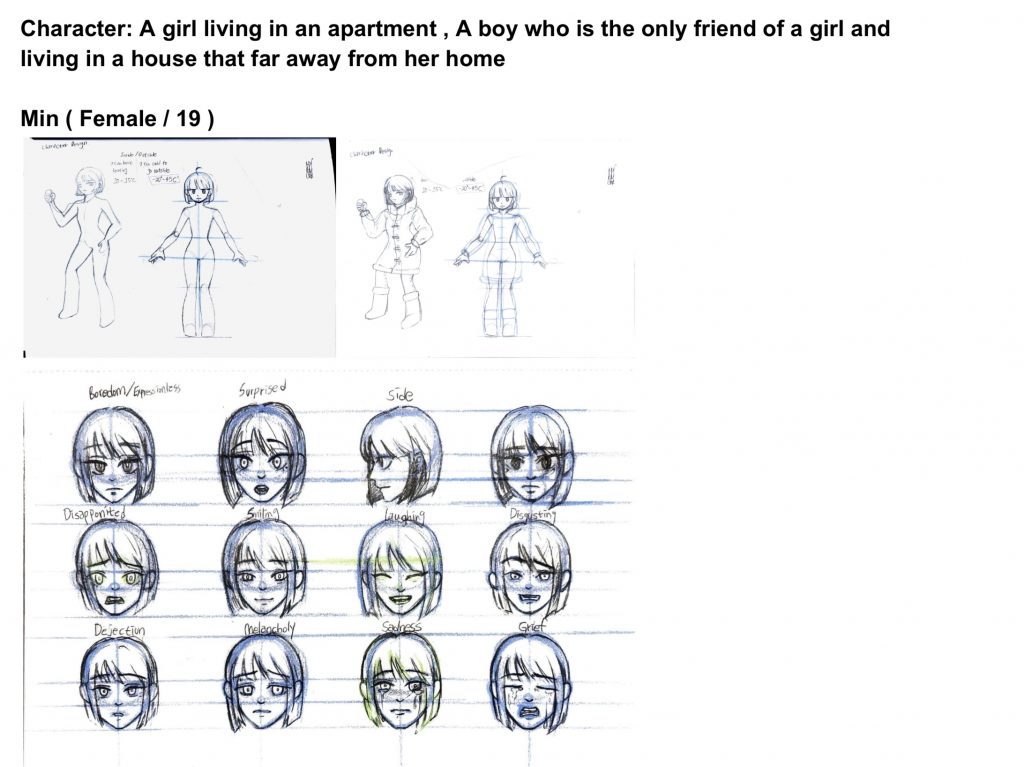
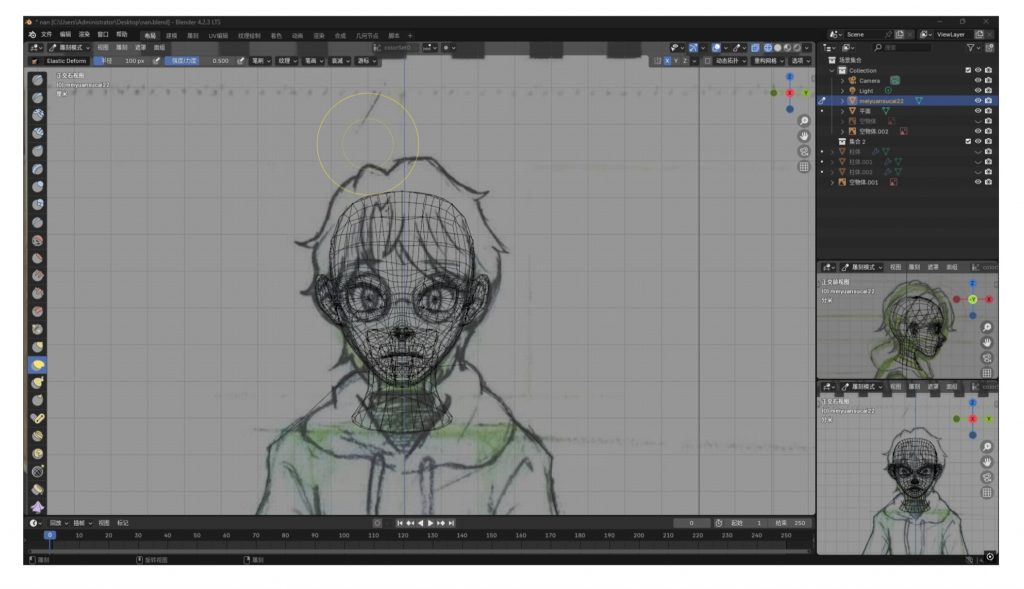
What’s particularly regretful is that in our finally – determined storyboard, our male lead doesn’t show his face at all. So the modeling of this male lead isn’t reflected in the subsequent 3D animation. Thus, you probably won’t see this male lead in our animation.
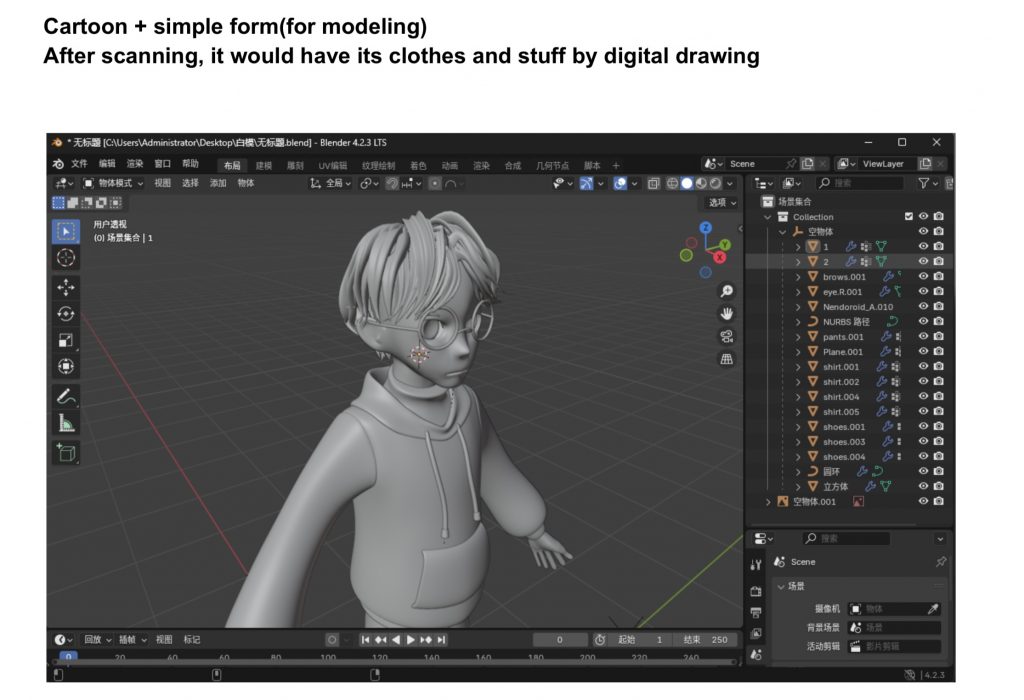
I have initiated my 3D modeling task, and this serves as the process reference image.
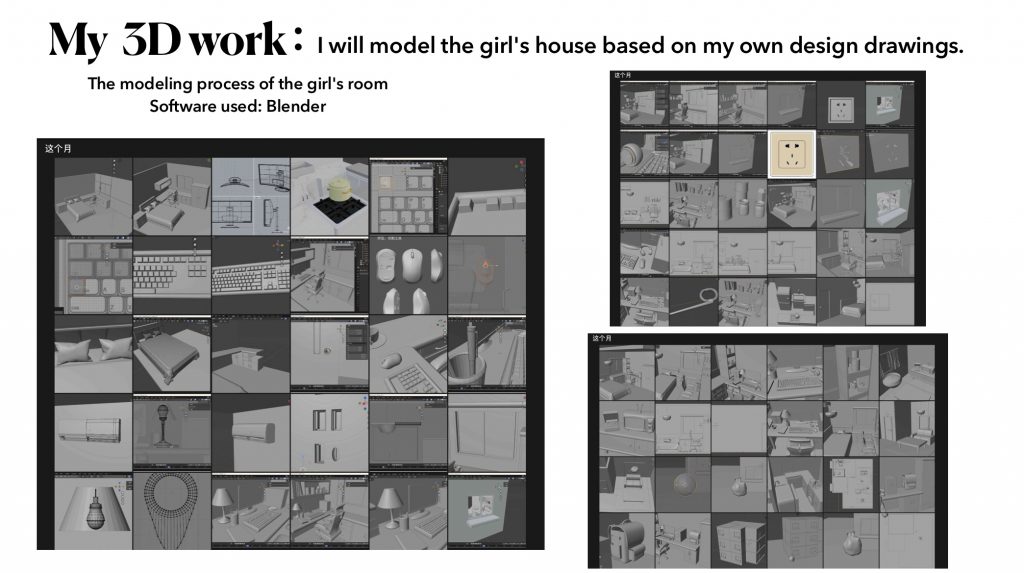
After completing my room modeling, I worked with my group members to further refine the model and conduct rendering.
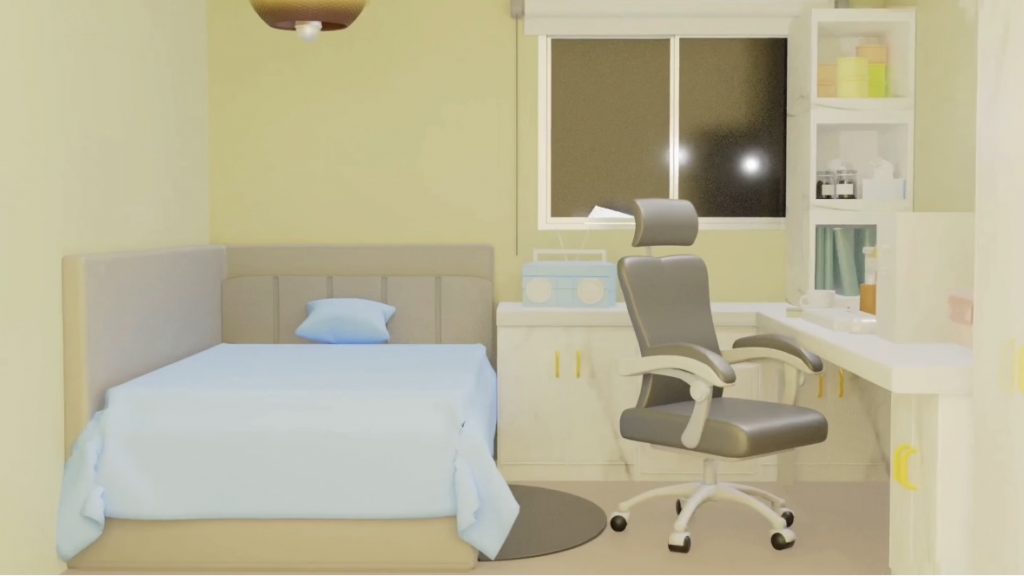
After that, we divided the animation production tasks. I started my part of the work.
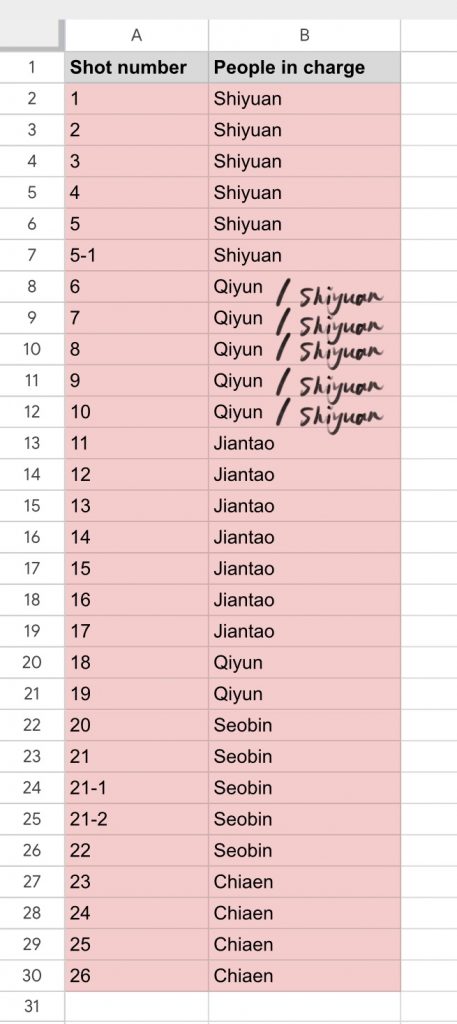
I was assigned shots 1 to 5, but to ease my teammates’ workload, I volunteered to take on extra parts. I have completed shots 1 to 10.


I was assigned shots 1 to 5, but to ease my teammates’ workload, I volunteered to take on extra parts. I have completed shots 1 to 10.
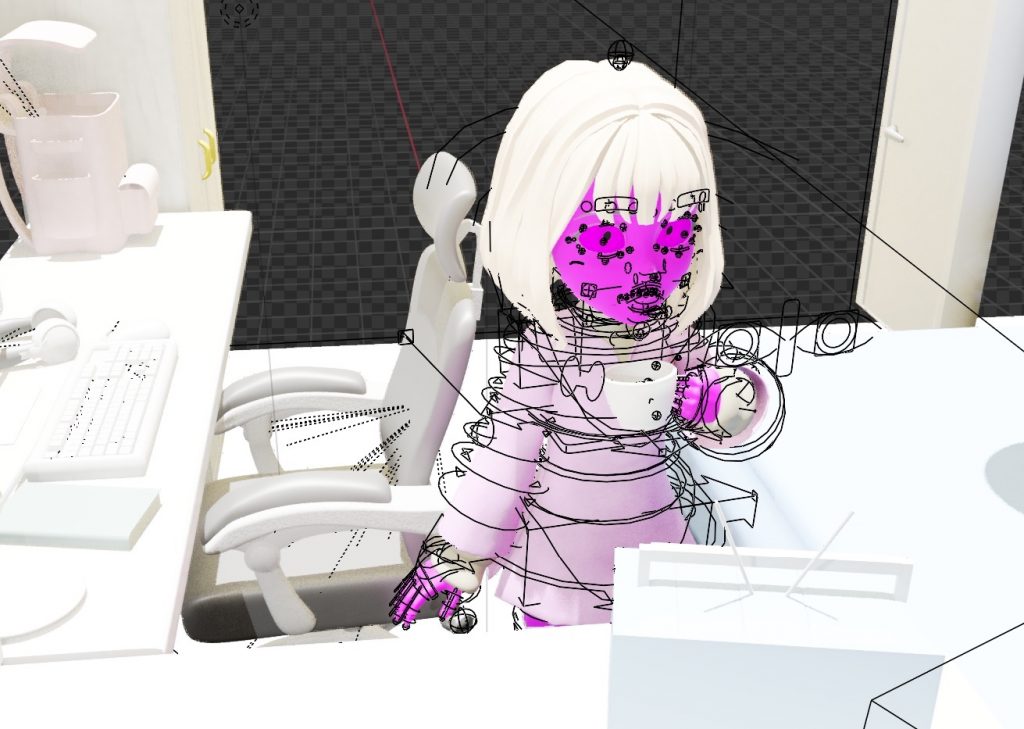
So I immediately asked the team member in charge of modeling the heroine, and she found that she forgot to save the materials during the production process.
We sought the teacher’s help. The teacher walked us through the heroine’s materials, helped re – apply and save the texture maps.
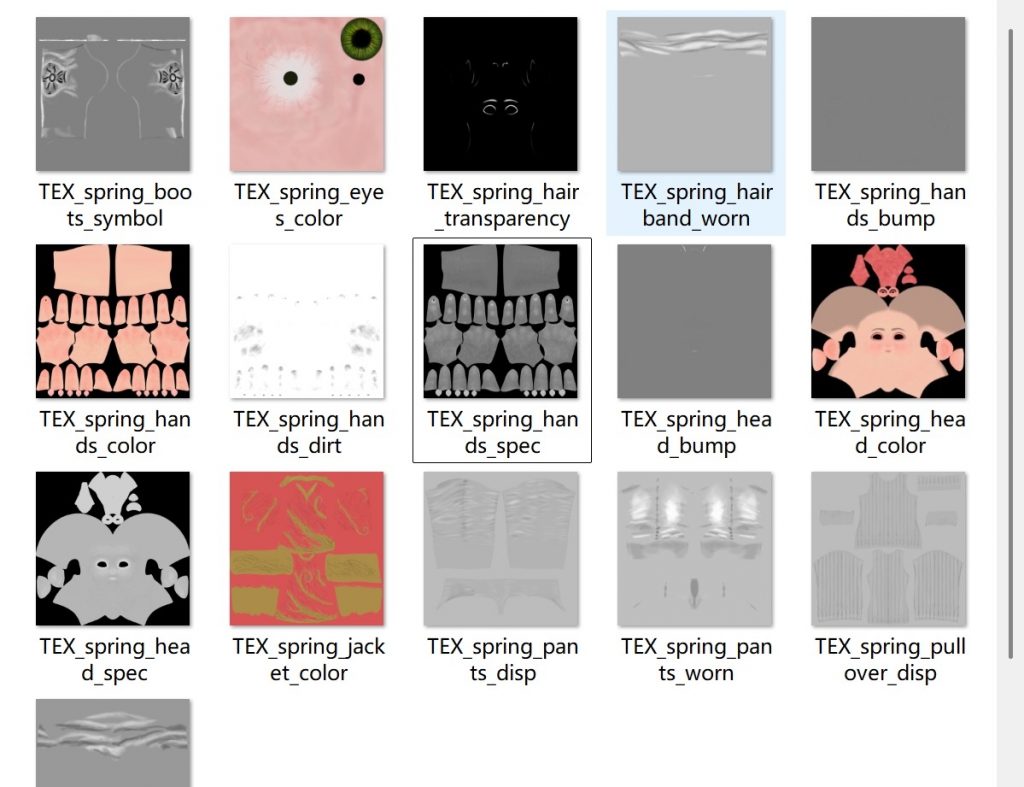
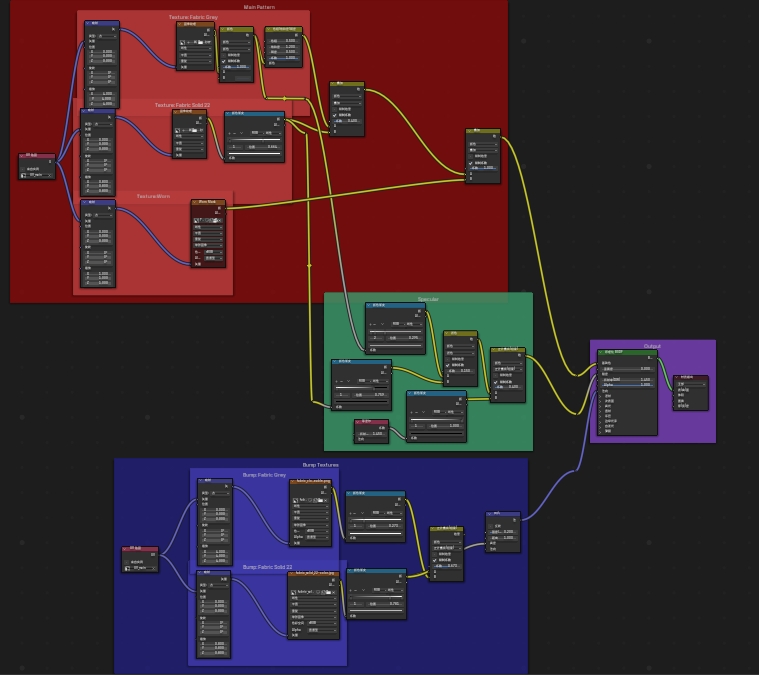
After finishing these texture mappings, my group members and I all breathed a sigh of relief. But unexpectedly, something unexpected happened again. In our modeling, the character appeared differently in rendering mode and the final animated video. A strange phenomenon occurred in the protagonist’s hair after rendering—abnormal strands grew, which confused my team and me. We started troubleshooting the issue.
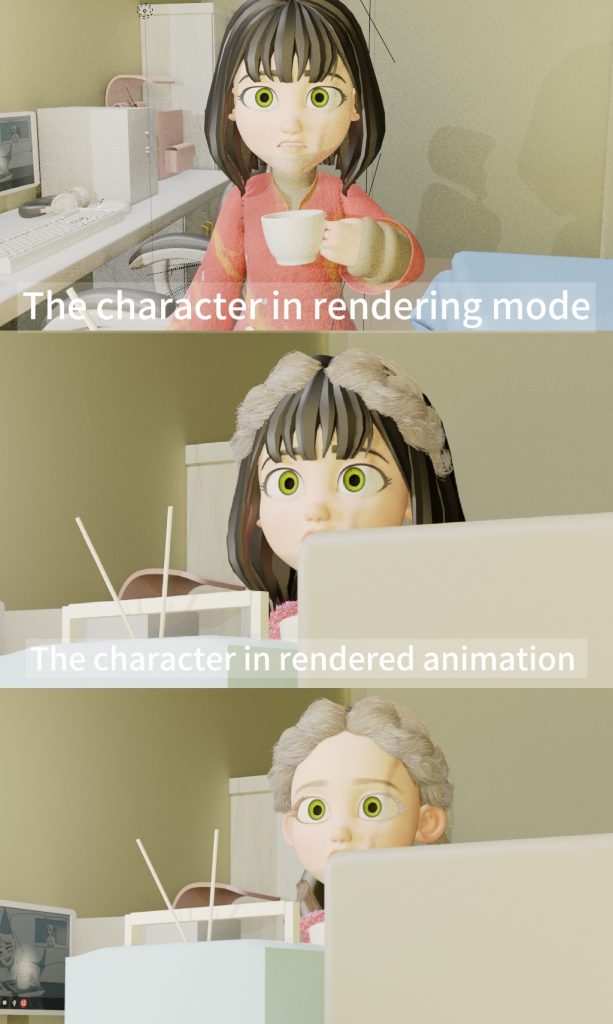
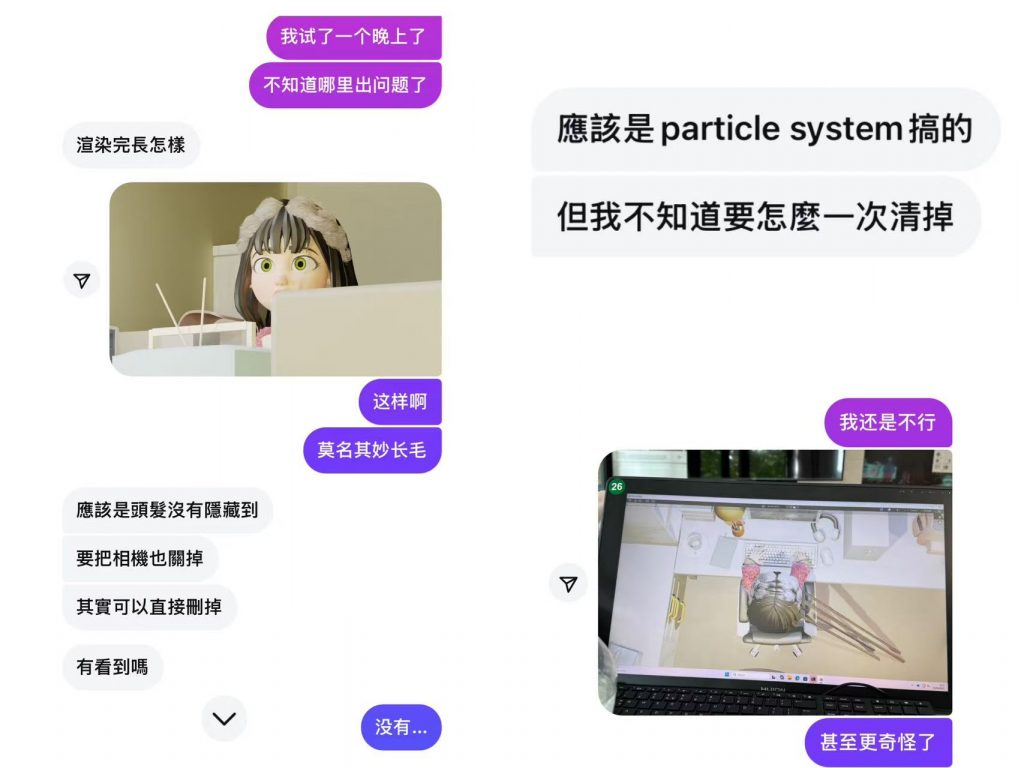
We tried many solutions, but since we weren’t on campus during the weekend, we couldn’t ask the teacher directly. We decided to wait until weekdays to go to school, but one team member found the fix and helped resolve the issue.
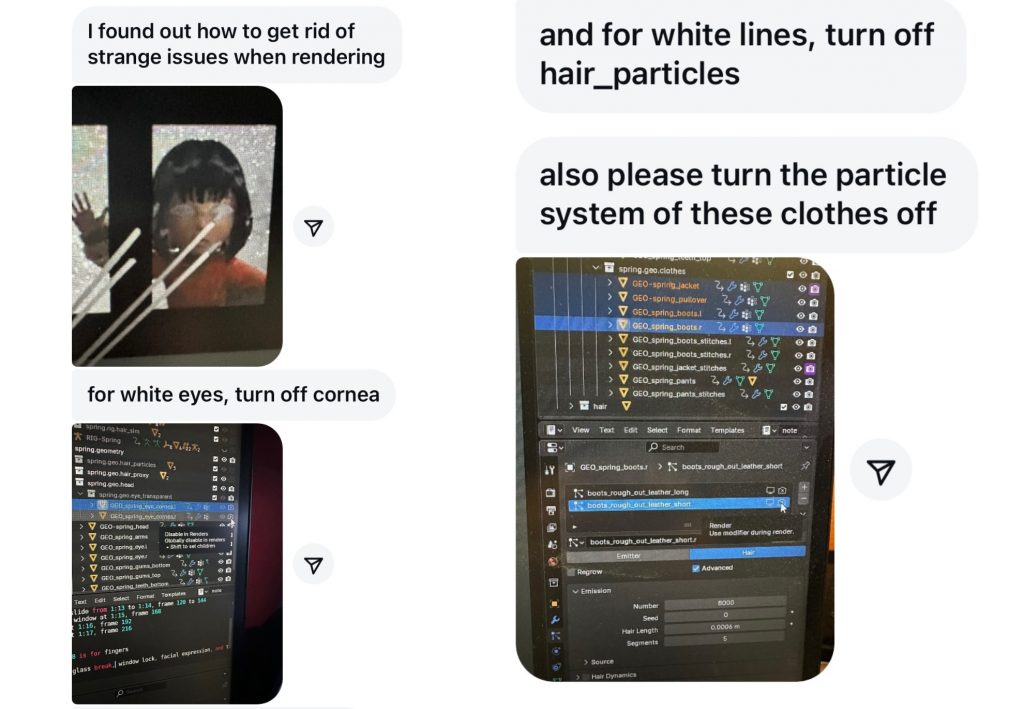
After solving the problem, I successfully completed my part of the animation production.
Team members gradually finished their animation production and uploaded the rendered videos to our shared folder.
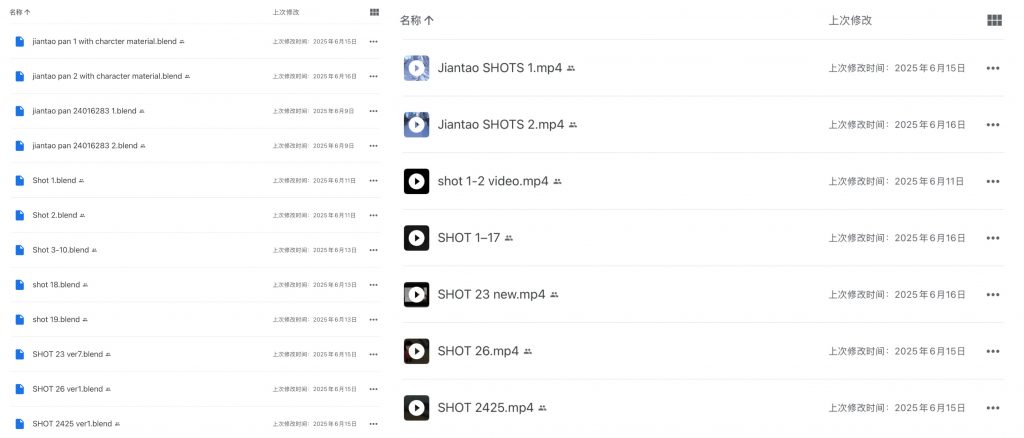
I received the rendered animation videos from my team members and started my video editing work. First, I integrated all the videos, began to make some deletions, and performed basic processing such as video fast – forward and slow – motion. After the processing was almost done, I started to look for sound effect materials online. I searched many websites, such as Bilibili. The sound effects I found include the howling wind in heavy snow, the sound of snowfall, characters walking in the snow, hitting the window glass, typing on computer keyboards, and windows sliding, etc.


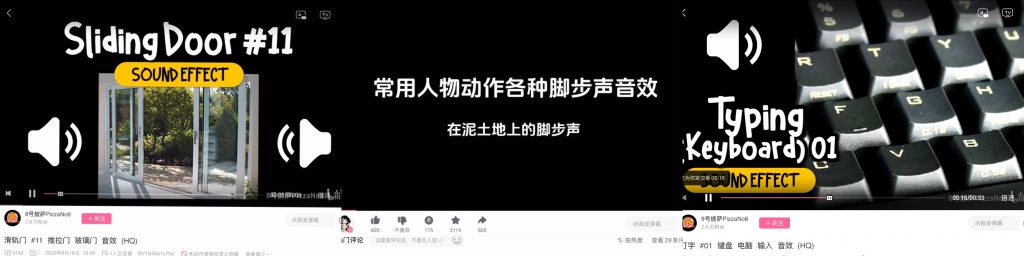
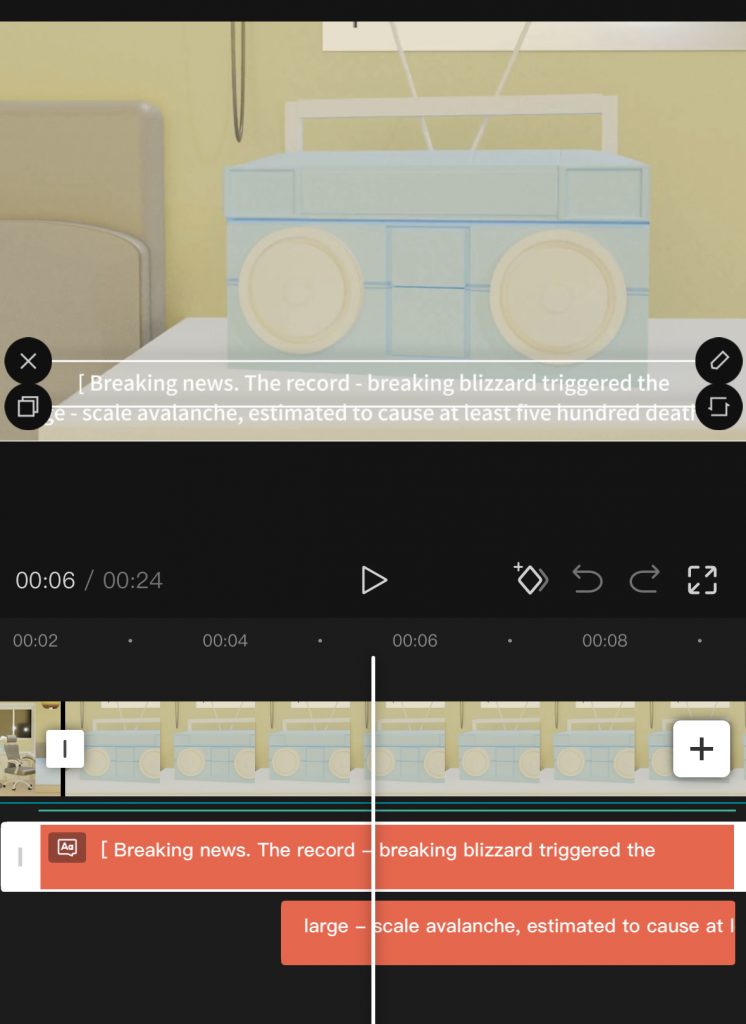
After adding these sound effects, I started to insert subtitles. For example, there is a scene where a radio broadcasts subtitles, so I need to add the broadcasted subtitles into our video.
Finally, I used my own voice to dub the female lead. In the animated video, the heroine utters some interjections in specific scenes. After learning some dubbing clips online, I did the dubbing for her myself.
Leave a Reply