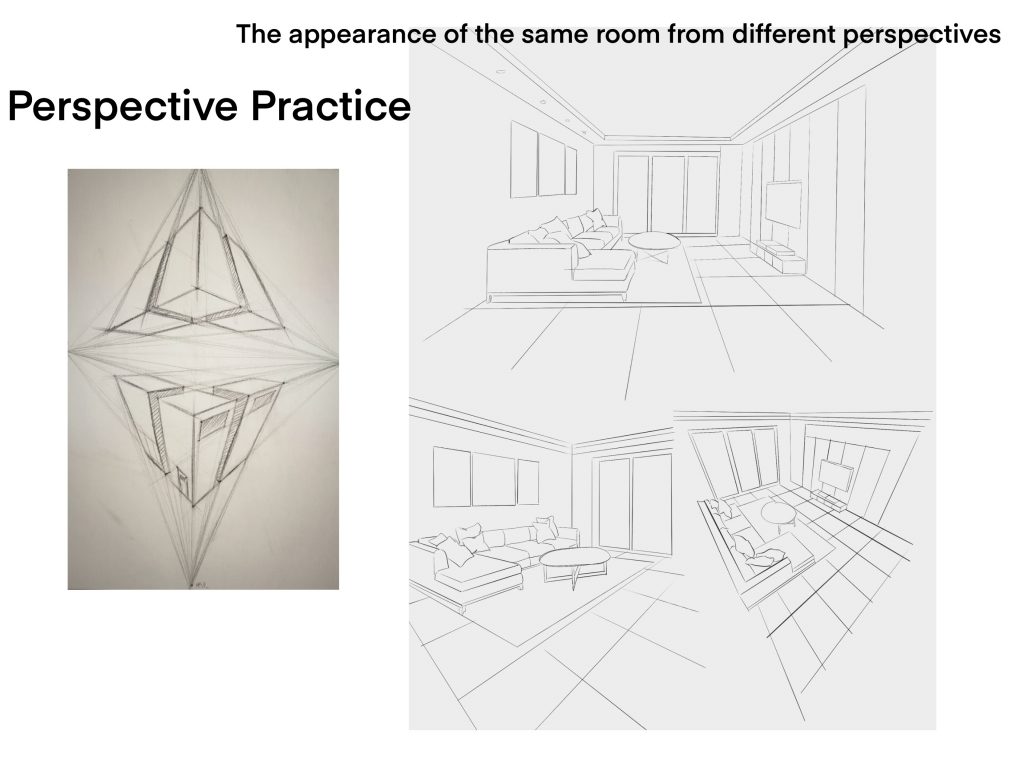
Perspective of the room
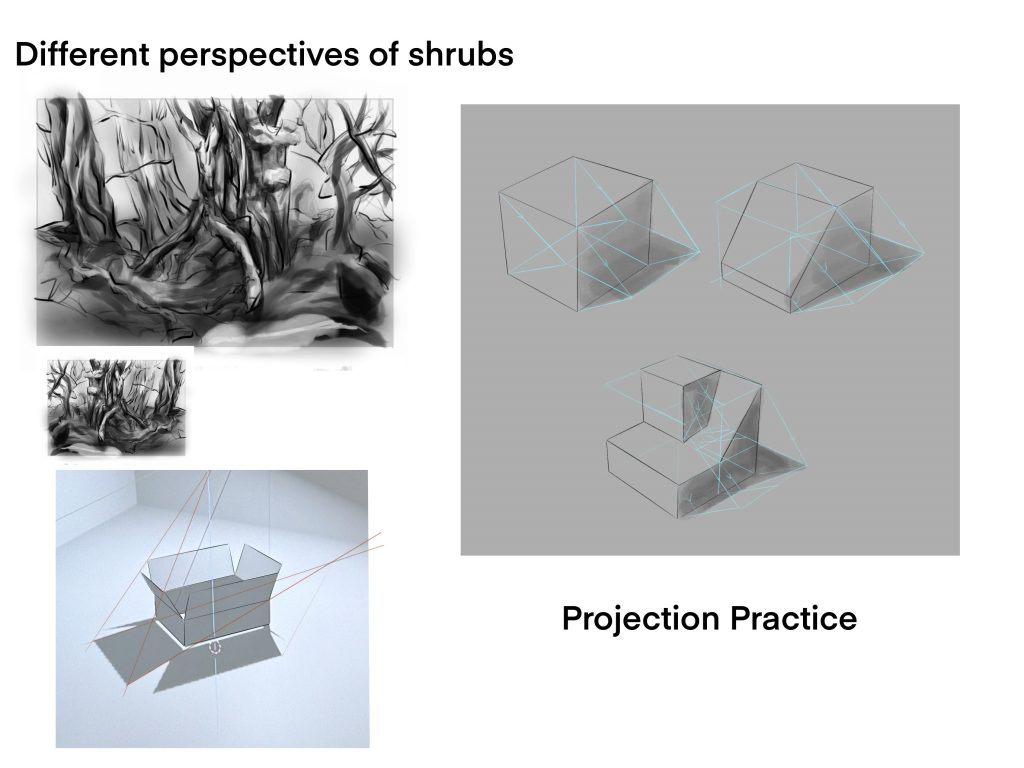
Projection of Shadow
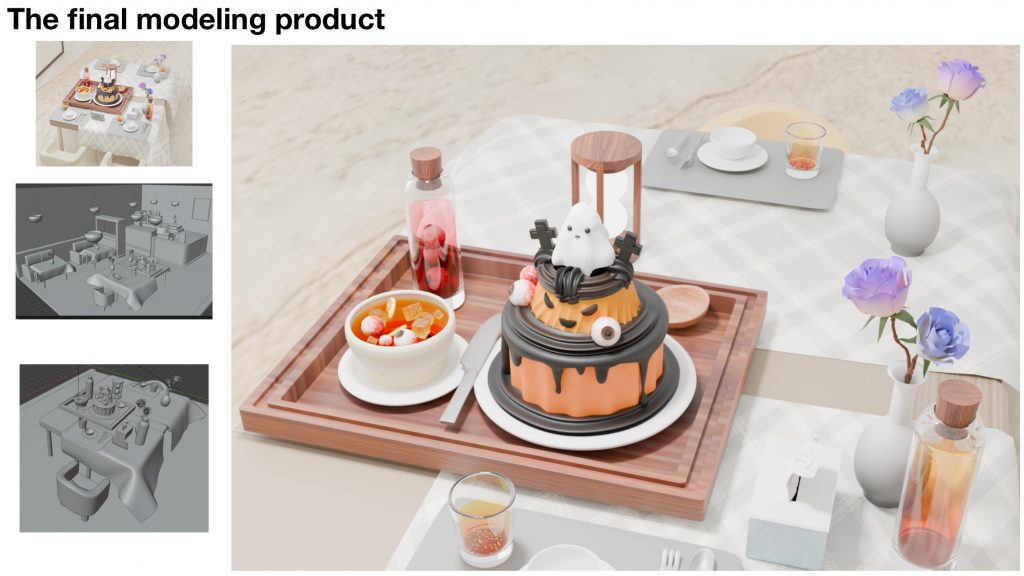
Begin Modeling——Eyeball soup project
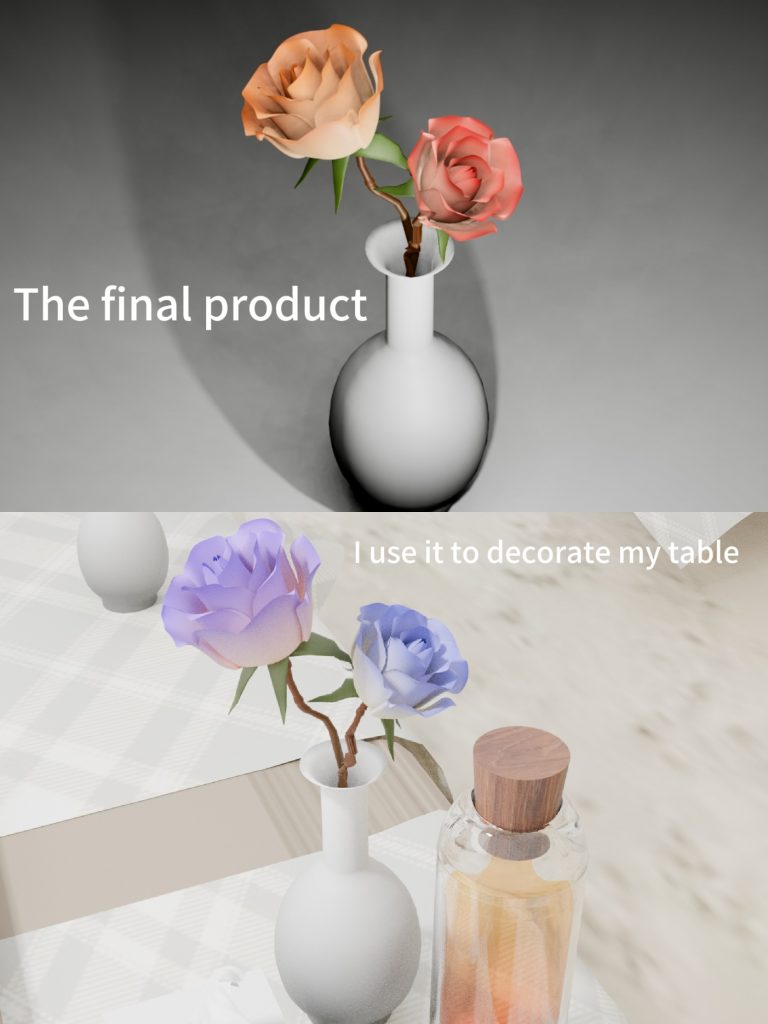
Modeling a Rose
The structure of a rose mainly includes the following parts:
Flower stem: connects the stem and other parts of the flower, serving to support and transport nutrients.
Flower holder: It supports various parts of the flower and has various shapes, such as spherical, jar shaped, or cup-shaped.
Sepals: Surrounding the outermost layer of the flower, usually 5 or sometimes 4, arranged in a tile like pattern, sometimes divided into feather like shapes.
Petals: The petals of a rose are usually 5 or sometimes 4, with a variety of colors including white, yellow, pink, and red. Petals spread out and arranged in a tile like pattern.
Stamens: including anthers and filaments, the anthers contain pollen, which combines with sperm in the pollen tube to form a fertilized egg. The stamens usually grow around the flower disk.
Pistil: including stigma, style, and ovary. The stigma is the part that receives pollen, and the style connects the stigma and ovary. The ovary contains ovules, which develop into fruits and seeds after fertilization.
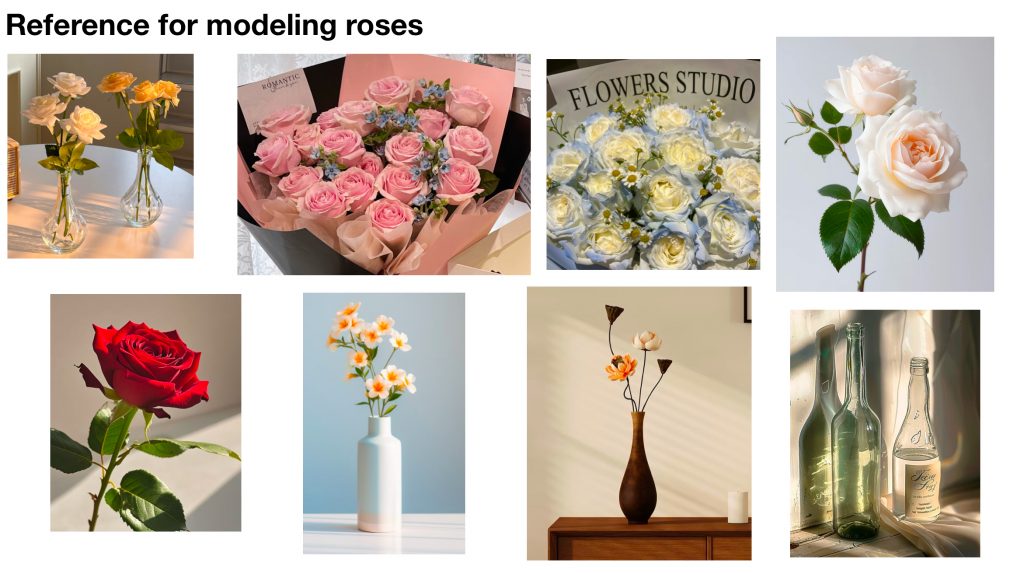
This is the process of modeling a rose, and I want to place a rose on my table.
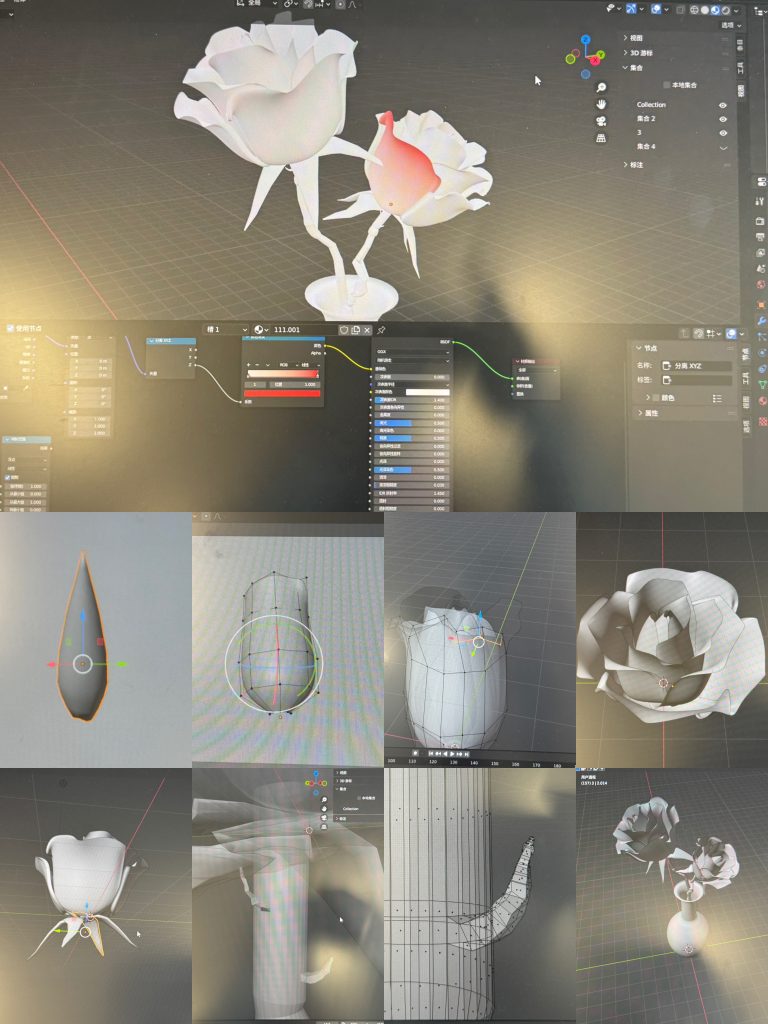
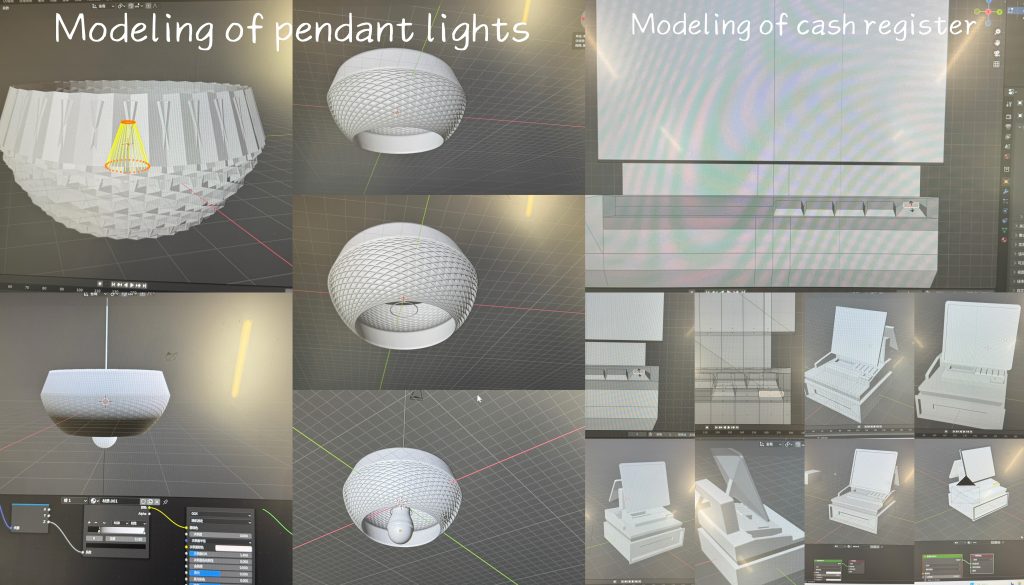
Start experimenting with modeling various items
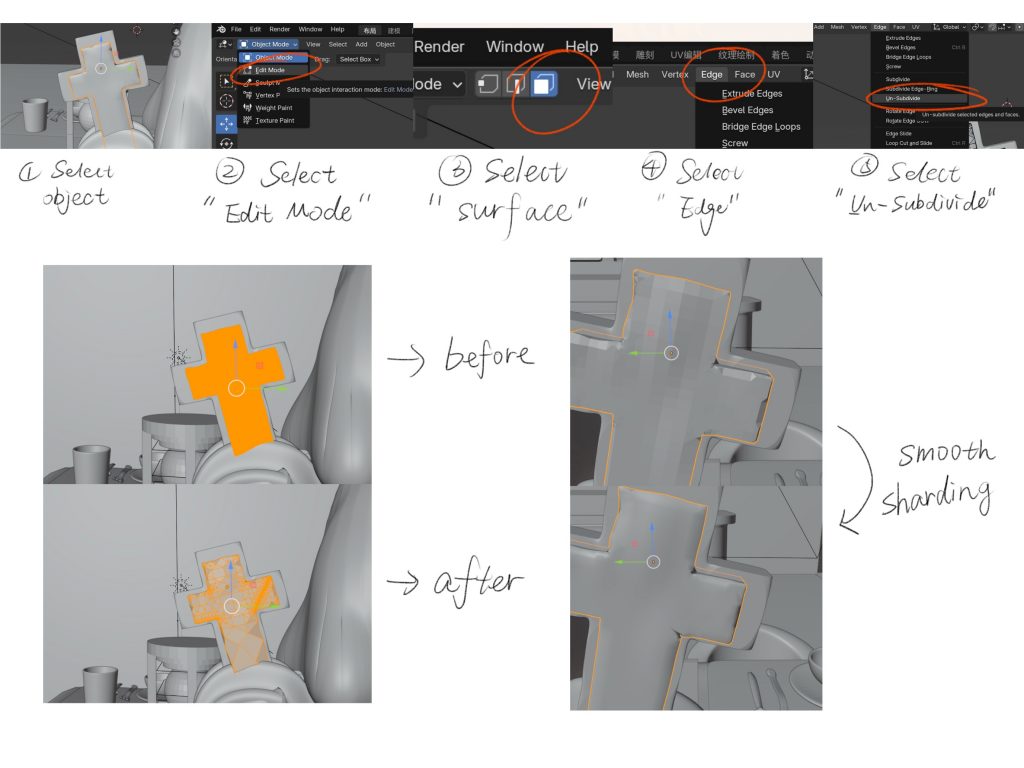
When we carve an object, we often subdivide its surface. But when we have too many faces, our files become stuck.
So I learned a good method of deleting face count online to help myself solve this problem.
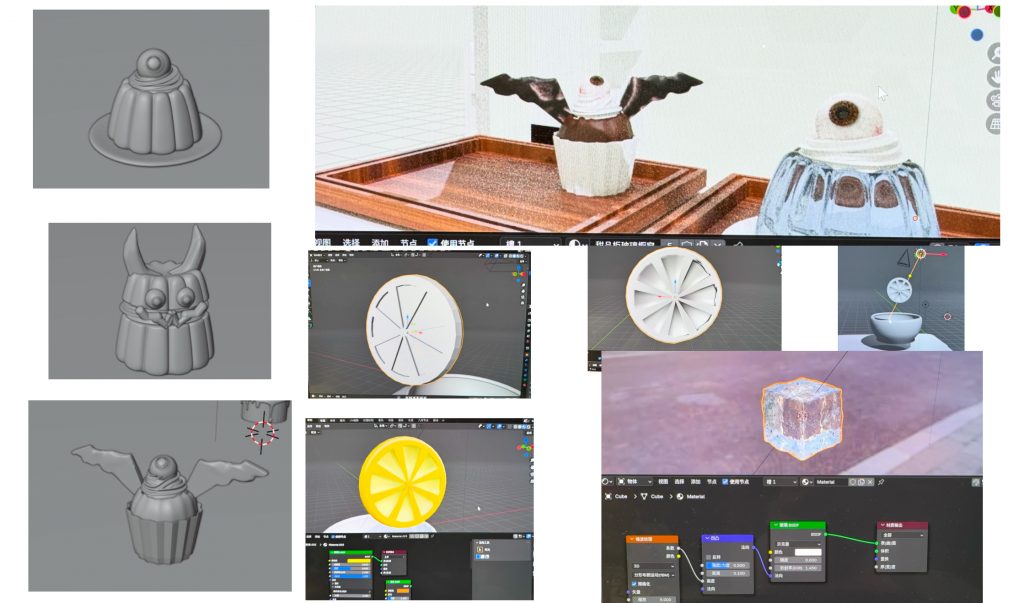
Modeling of some small items
My overall source of inspiration and references
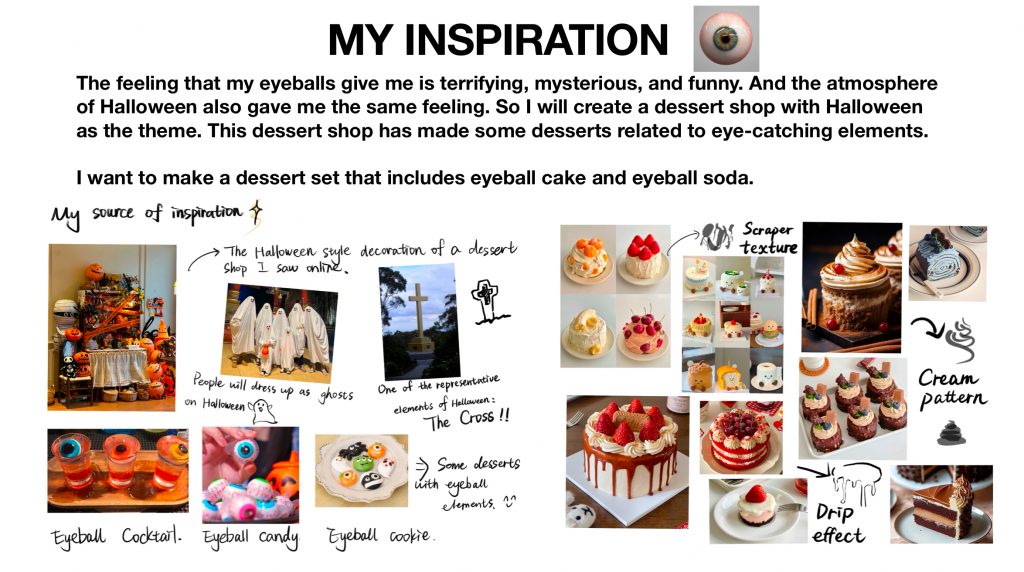
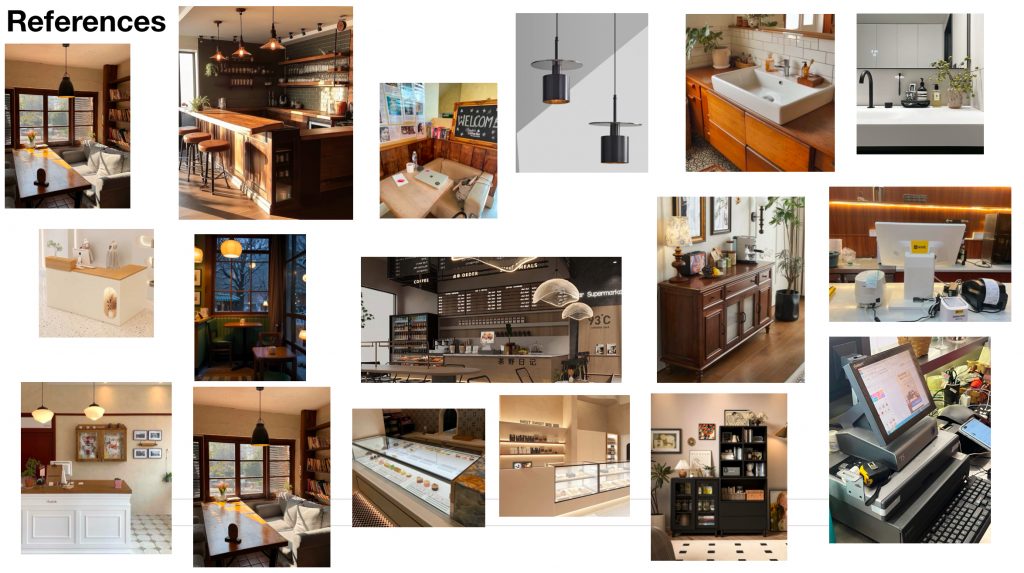
My story is set on a small street where a new dessert shop has opened. At that time, Halloween was approaching, so this dessert shop launched many Halloween themed desserts. A local resident learned of this news and booked a Halloween set meal at the store, planning to invite a friend from out of town to try it out.
Leave a Reply